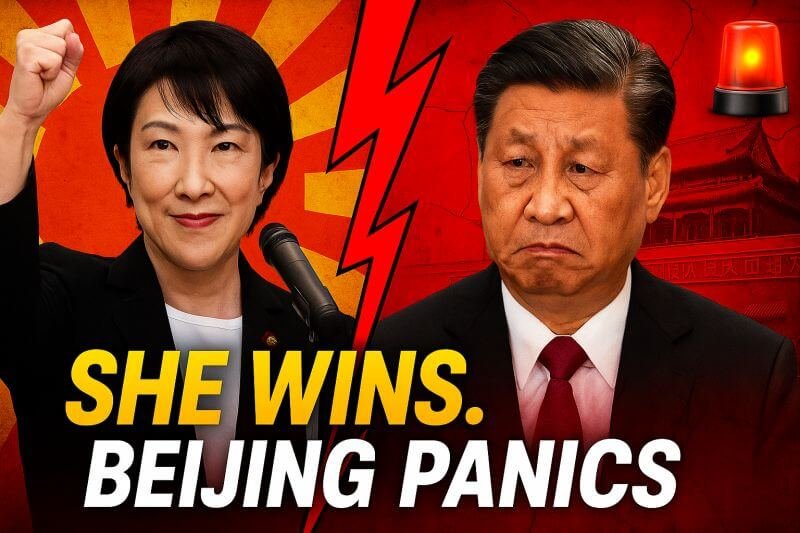
History was made today. Sanae Takaichi is set to become Japan’s new Prime Minister — and her rise will resonate far beyond Tokyo. She is not your typical consensus politician. Conservative, nationalist, and unapologetically assertive, Takaichi is one of the few leaders in Asia ready to look Beijing straight in the eye and declare: “We’re done being intimidated.” For years, the Chinese Communist Party (CCP) operated under a comforting fantasy: Japan is weak, pacifist, and dependent. That illusion has now ended. Having lived in Beijing, I often witnessed the nightly narrative: “Japan is finished. China leads now.” But visiting Japanese-run offices told a different story: quiet, disciplined, and remarkably efficient. While China boasted loudly, Japan quietly performed. Today, that quiet competence now has armor — and Beijing knows it. The Iron Lady’s DNA Takaichi hails from the right-wing nationalist core of the Liberal Democratic Party (LDP) — the faction that believes Japan’s pride depends on strength and sovereignty. She has long advocated for: Rewriting Japan’s pacifist constitution Formally recognizing the Self-Defense Forces as a legitimate army Standing firm on national sovereignty Within the party, she is known as a China hawk: skeptical of diplomatic engagement, vigilant about security, and committed to strengthening Japan’s control over the Senkaku Islands — one of Beijing’s most sensitive nerves. From Pacifist to Powerful Japan has already begun rearming, but under Takaichi, the process will accelerate. Expect: Deployment of hundreds of Tomahawk missiles Enhanced counter-strike capabilities Joint drills with the U.S., South Korea, the Philippines, and Australia Every exercise and upgrade sends a clear message: the balance of power in East Asia is shifting. This isn’t just about military might. Japan’s strategy extends to the economy. Takaichi understands that national security begins in the supply chain. She is: Tightening investment screening Restricting sensitive tech exports to China Redirecting production toward Taiwan, Vietnam, and India Japan’s approach is straightforward: build resilience before Beijing can weaponize dependence. The Taiwan Factor Takaichi has long been clear on one point: Japan’s security is inseparable from Taiwan’s survival. Under her leadership, Japan will: Expand cooperation with the U.S. Turn the southwestern islands into forward logistics hubs Ensure Beijing knows that invading Taiwan means facing Japanese radar, missiles, and resolve She will also strengthen semiconductor and rare-earth partnerships with Taiwan, effectively cutting China out of critical supply chains. This is not symbolism — it’s strategy. The New Contrast in Asia Japan has elevated a woman — conservative, unapologetically tough — to its highest office. Across the sea, China remains trapped in a one-man autocracy that silences women, dissent, and debate. This contrast itself is soft-power dynamite. Takaichi’s rise is not just a Japanese milestone — it’s Beijing’s nightmare. When Japan stands tall, Beijing trembles. And under Takaichi, that trembling has already begun.
The Real Economic Miracle Isn’t in Beijing — It’s in Taipei
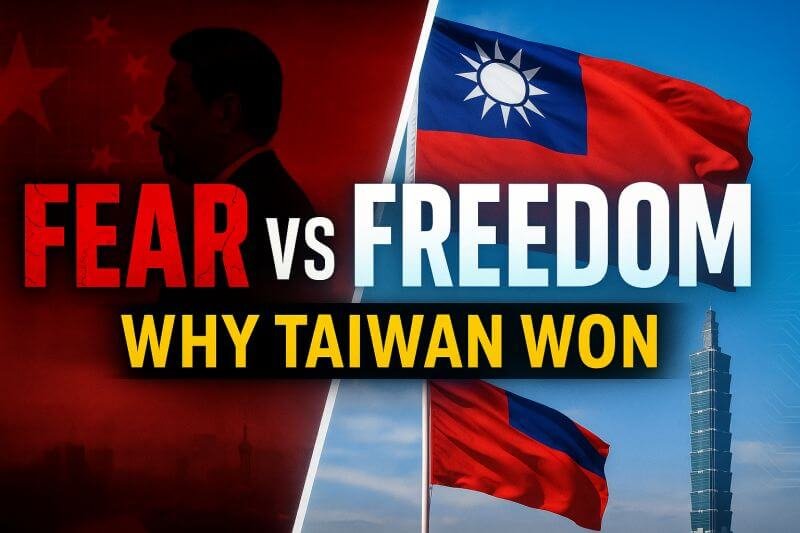
You’ve heard of China’s so-called “economic miracle.” Let me show you the miracle China doesn’t want you to notice — a miracle that didn’t need censorship, forced tech transfers, or trillion-yuan bailouts, because it’s happening right across the strait. That’s right — Taiwan quietly became the real economic miracle. No ghost cities. No propaganda parades. No “common prosperity” slogans. Just a small, free island that turned democracy, discipline, and innovation into rocket fuel for growth. As Taiwan celebrates its 114th National Day, there’s never been a clearer moment to say this out loud: The world’s most remarkable economic success story today isn’t China — it’s Taiwan. When I worked in Beijing’s finance scene, Taiwan wasn’t discussed — it was erased. Even saying “investing in Taiwan” felt like crossing a red line. Now? It’s the portfolio everyone wishes they bought ten years ago. Taiwan’s Numbers Tell the Story GDP growth: 5.1%, the highest among the Asian Tigers — far ahead of China’s slowdown. Taiwan Stock Exchange: Up six straight months, hitting 27,300 points. Total market cap: Over $3 trillion, the 8th largest in the world. A nation of 23 million — smaller than one Chinese province — now commands a stock market bigger than Germany’s or South Korea’s. Germany builds cars. South Korea builds ships. Taiwan builds the chips that power both. Brains, Courage, and Nanometers No oil fields. No colonies. No vast domestic market. Just brains, courage, and nanometers. Every time Beijing flexes a missile, Taipei flexes its balance sheet. Investors are voting with their money — because profits speak louder than propaganda. This isn’t a speculative bubble. It’s built on engineering excellence, rule-of-law, and transparent capitalism. Taiwan is now viewed as more trustworthy, more stable, and more capitalist than China’s state-engineered casino. The Real Kicker Taiwan achieved all this without stealing a single patent, without forced tech transfers, and without gaming the WTO by pretending to be “developing.” It grew the old-fashioned way — by earning trust, not extorting it. By letting private enterprise — not party officials — pick the winners. While China built a surveillance state, Taiwan built a semiconductor empire. While Beijing bullies, Taipei builds. Strength Under Threat The most underrated part? Taiwan does all this under constant threat — warplanes, cyberattacks, disinformation — yet its markets stay open, factories keep running, and exports keep growing. That’s not just economic strength — that’s psychological strength. Taiwan thrives in the open, confident in its freedom. It proves that prosperity doesn’t require control — it requires character. Miracles don’t need censorship or subsidies. They need freedom, trust, and courage. That’s why the real miracle isn’t in Beijing — it’s in Taipei. And the world better start treating it that way. 🇹🇼
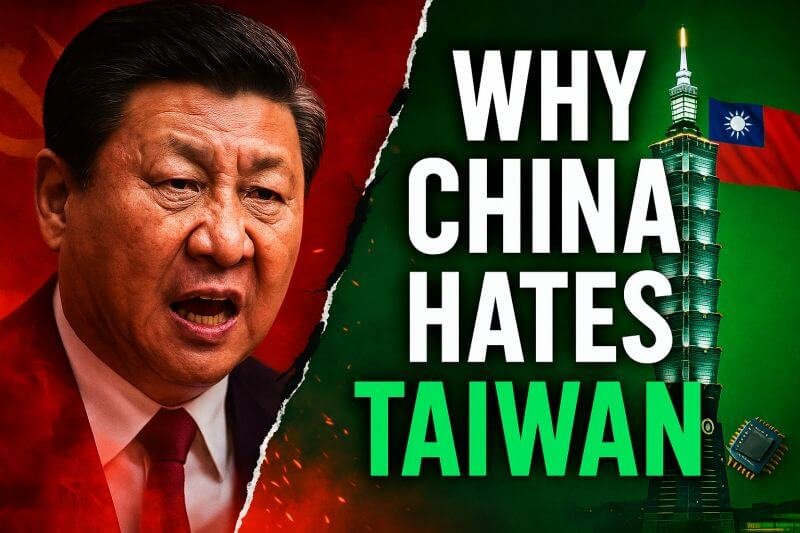
Why China Does NOT Want a Thriving Taiwan
Let me tell you a dirty little secret about China. It’s not just about Taiwan being a “runaway province.” China hates Taiwan for one terrifying reason: Taiwan proves the Chinese people don’t need the Communist Party to have prosperity, technology, or global respect. Beijing isn’t scared of Taiwan’s army. It’s scared of Taiwan’s ideas. Because if 23 million Chinese people across the strait can run a thriving democracy, what’s stopping 1.4 billion mainlanders from asking: “Why can’t we have that too?” The CCP’s Worst Nightmare In The Narrow Corridor, economists Daron Acemoglu and James Robinson argue: Freedom is rare. It only survives when there’s a balance of power between state and society. On one side: chaos and failed states. On the other: totalitarian control. Freedom lives only in the middle. China? It’s nowhere near the middle. It’s a Despotic Leviathan. The CCP controls everything — even your private thoughts. Taiwan Walked the Narrow Corridor Forty years ago, Taiwan looked a lot like China. Martial law. One-party rule. But then civil society pushed back. Step by step, Taiwan built a vibrant democracy. Today, Taiwan proves that Chinese people can have freedom. That democracy isn’t a “Western idea” — it’s universal. And this is what terrifies Beijing. Taiwan destroys the CCP’s favorite propaganda line: “Chinese culture is incompatible with democracy. Chinese people need authoritarianism to survive.” It’s a scam narrative to justify dictatorship. But Taiwan proves them wrong every single day. Why the CCP Can’t Stand the Comparison Look at the numbers: Taiwan’s GDP per capita is 3x higher than China’s. Taiwan makes 90% of the world’s advanced semiconductors. Taiwan ranks among the freest societies on Earth. And it does all this without a CCP. Meanwhile, China is drowning in censorship, ghost cities, real estate bubbles, and surveillance. Taiwan is like a Ferrari parked next to China’s busted bicycle. And Xi Jinping can’t stand the comparison. The CCP’s Existential Fear Authoritarian regimes fear internal collapse most of all. The CCP survives by keeping its people weak and divided. But Taiwan’s very existence plants a dangerous idea: “If Taiwan can do it, maybe we can too.” This is why Beijing calls Taiwan a “renegade province.” Why it floods social media with trolls. Why it threatens war every election cycle. It’s not about territory. It’s about control. I’ve walked the streets of both Taipei and Beijing. The difference is night and day. Whenever I visit Taiwan, I think: “This is what China could be… if it ever escapes the CCP.” So next time you hear Beijing scream about “reunification,” remember: It’s not a family reunion. It’s a cover-up. Taiwan isn’t just fighting for its own survival. It’s fighting for the soul of an entire civilization. Question for you: What happens when 1.4 billion people finally see the truth in that mirror?
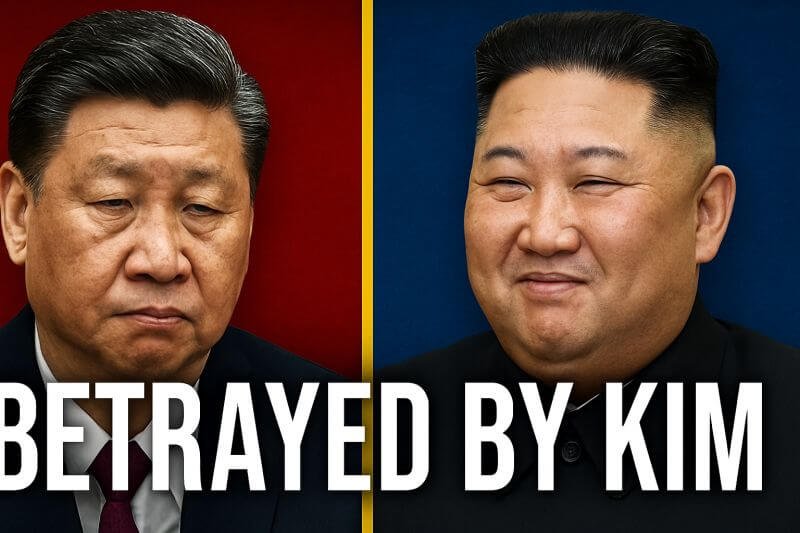
China’s Greatest Strategic Blunder: How Kim Jong Un Plays Xi Like a Fool
Geopolitics often looks like a chess game. But in this case, Kim Jong Un is playing 4D chess… and Xi Jinping isn’t even playing checkers. For decades, Beijing has treated North Korea as its “strategic buffer zone” — a barrier against U.S. military power in East Asia. Billions in aid, fuel, and food have flowed across the Yalu River. In return, China expected loyalty, alignment, and leverage. Here’s the problem: this entire strategy is built on obsolete logic. During World War II, having a physical buffer made sense. But in today’s world of intercontinental ballistic missiles and nuclear weapons, distance means nothing. North Korea’s very existence doesn’t shield China — it endangers it. Consider the Facts Kim Jong Un’s regime is built on nuclear weapons as its sole survival strategy. Every test he conducts near China’s border risks escalating tensions with the U.S. and Japan — right on Beijing’s doorstep. Far from “tying down” American forces, North Korea’s actions justify an even larger U.S. military presence near China. Worse, Kim has zero respect for Beijing. He takes Chinese aid, then uses it to strengthen his independence from China. He plays along with “socialist brotherhood” symbolism when it suits him — like attending a military parade — while secretly mocking Xi’s desperation. Xi’s Ideological Trap Meanwhile, Xi is trapped by two ideological chains: Mao’s legacy of the “War to Resist U.S. Aggression and Aid Korea,” and the CCP’s narrative of socialist solidarity, which Xi has woven into his “national rejuvenation” vision. These chains prevent Xi from admitting the obvious: North Korea is no ally. It’s a liability, a rogue state holding China hostage. The Ultimate Irony Some CCP hardliners fantasize about using North Korea as a partner in a Taiwan conflict. In reality, Kim would do whatever benefits Kim, likely stabbing Xi in the back when it matters most. The Strategic Takeaway China’s decades-long investment in North Korea has produced the opposite of security. Instead of a shield, Xi has created a time bomb — one that could explode at any moment, destabilizing China’s entire northeastern frontier. Geopolitics isn’t about sentiment or legacy. It’s about cold, hard calculations. And on that front, Kim Jong Un has outmaneuvered Xi Jinping completely.